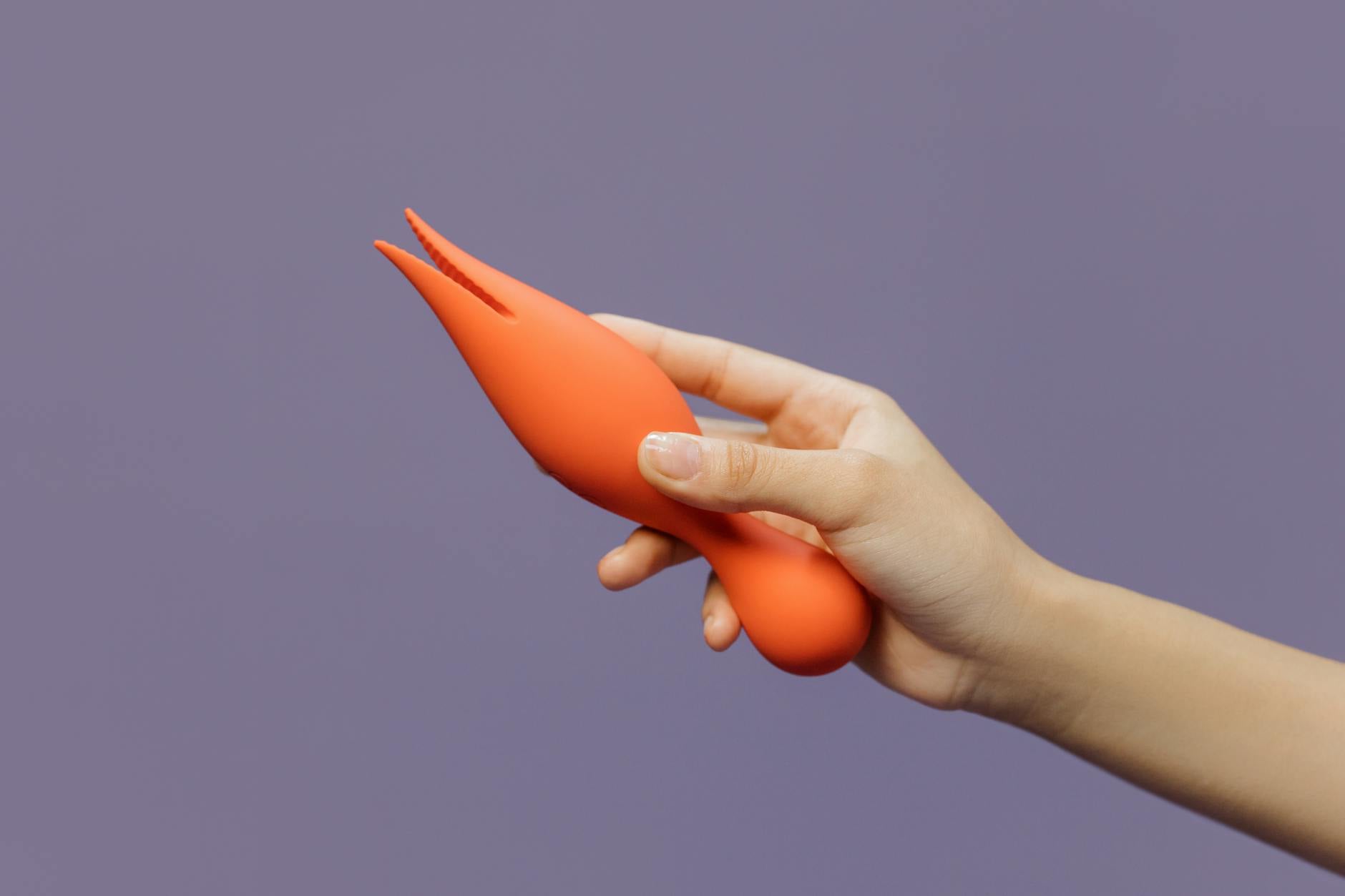
Your sensitivity probably isn't broken. It's just recalibrating.
When you haven't had pleasure in a long time, your first instinct might be to dive back in. But here's what actually happens: after weeks or months away, your vulva's nerve endings become hypersensitive. That's not damage. That's your body remembering what it felt like and overreacting. The clitoral tissue has fewer stimuli to process, so when you finally touch it again, the signal gets amplified before it settles down.
This is why people often say things feel "too intense" or "almost painful" when they return to solo play or partnered sex after a break. It's not that you've lost capacity. It's that your nervous system needs to recalibrate what normal stimulation feels like. And this matters because pushing through that intensity instead of working with it can actually make you avoid pleasure again.
Why intensity spikes after time away
Three physiological things happen when pleasure pauses:
Your nerve receptors stay active but hungry. Clitoral nerves don't atrophy. Instead, they become more responsive to input because they've had less input. It's like turning up the volume on a quiet room. When sound finally comes, it feels deafening.
Desensitization disappears. Normally, if you stimulate the same nerve pathway repeatedly, your body gradually needs more intensity to feel the same sensation. This is called habituation. It's protective. After a break, that habituation resets, so lower intensity feels higher than you remember.
Your pelvic floor tightens. During extended breaks from pleasure, the pelvic floor muscles often become more tense. This creates resistance, which changes how sensation travels and can make light touch feel sharp rather than pleasant.
The good news: lemon clitoral vibrators are specifically designed to handle this recalibration because they let you control intensity granularly and build arousal in stages instead of slamming into full stimulation immediately.
Why lemon suction vibrators work better than traditional buzzers for hypersensitivity
This is the critical difference. A standard vibrator creates percussion. It vibrates at a fixed frequency. If your clitoris is hypersensitive, that mechanical percussion can feel like it's stabbing rather than massaging. The sensation bypasses pleasure and goes straight to discomfort.
Lemon adult toys use air-pulse technology (suction that mimics oral sensation). This matters because suction engages the entire clitoral complex, not just the nerve-dense tip. The stimulation is gentler, more dispersed, and focuses on the body's natural arousal reflex rather than direct friction.
When you're returning after a break, that broader engagement actually makes the sensation feel more sustainable. You can build arousal from a lower baseline without triggering that sharp, overwhelming response.
How to ease back in without forcing it
Four concrete steps:
Start with the lowest settings. The lemon vibrator has multiple intensity levels. Begin with pattern 1 or 2. This sounds obvious, but most people skip this step because they assume their baseline hasn't changed. It has. Treat it like it's your first time.
Focus on the outer third of the clitoris first. The clitoral glans is the most nerve-dense and therefore the most sensitive. The surrounding tissue is less sensitive. Position the lemon toy so it's covering more area rather than zeroing in on the tip. This distributes stimulation and prevents that overwhelming spike.
Use long sessions at low intensity over quick sessions at high intensity. It's tempting to "get there faster" after being away. Resist that. Instead, spend 20 minutes with your lemon clitoral vibrator at low intensity, letting your arousal build gradually. Your nervous system gets time to normalize the input, and you avoid that dysregulated feeling that makes you want to stop.
Warm yourself up before turning on the toy. Spend 10 minutes with your hands, breathing, or partnered touch before introducing the vibrator. This wakes up your pelvic floor gently and primes your nervous system. It makes the transition to the vibrator feel like an addition, not a jolt.
The mental piece matters as much as the physical one
Honestly, the thing nobody talks about is that hypersensitivity is partly neurological and partly psychological. If you've been avoiding pleasure or you stopped because of shame, or because you were in a situation where it wasn't safe, your brain is still protecting you. That protection shows up as a shutdown response. The stimulation feels "too much" not just because your nerves are sensitive, but because part of you is still saying "this isn't safe."
That's where the lemon vibrator's controllability becomes emotional, not just physical. Because you can adjust intensity mid-session. You can pause. You can restart. You have total agency. That sense of control often dissolves the protective shutdown faster than anything else can. Your body starts to trust that you're not forcing it, and sensation normalizes.
If you're coming back after a relationship ended or after a period of low desire, give yourself permission to take this slowly. Hypersensitivity isn't a barrier. It's data. It's telling you that your body is ready, but it needs gentleness first.
When to check in with a provider
If intensity doesn't ease after three or four sessions, or if it actually feels sharp or painful rather than just "strong," mention it to your GP or gynaecologist. Sometimes extended breaks reveal things like pelvic floor dysfunction or vulvodynia that need proper support. That's not a failure. That's information. A provider can recommend pelvic floor physical therapy or other tools that work alongside your lemon sexual toy, not instead of it.
If you're returning after trauma or a long period of avoidance, working with a sex therapist alongside a physical approach can also help. They can help you separate the psychological barriers from the physical ones so you know what you're actually working with.
When recalibration actually accelerates pleasure
Here's the part that surprised most of my clients: people often report that once they get through this hypersensitivity phase, their pleasure becomes deeper than it was before the break. That's because you've essentially reset your nervous system. You're not running on old habituation patterns. You're building new ones, and you have the chance to build them mindfully.
Lemon clitoral vibrators become even more effective at this stage because you've now recalibrated what your baseline feels like. You understand your own settings better. You're no longer guessing. After a break, people who use lemon adult toys often find that they can access multiple orgasms more easily, or that sensation feels more detailed and localized rather than just intense overall.
The break wasn't a setback. It was a reset.
People also ask
How long does it take for sensitivity to normalize after a break from pleasure?
Most people see significant normalization within three to four sessions using a lemon vibrator at their own pace. That could span a week or two depending on how often you explore. Full recalibration where sensation feels completely natural again typically takes two to three weeks of regular exploration. The key is consistency at low intensity rather than sporadic high-intensity sessions. Your nervous system needs practice to relearn what normal stimulation feels like.
Can hypersensitivity actually be permanent after a long break?
No. Your nerves don't change permanently. They recalibrate. Even after years away from pleasure, your clitoral nerve endings will normalize again with gentle, consistent stimulation. The process is faster than most people expect, especially when using a lemon vibrator because suction allows for such fine-tuned intensity control. Permanent hypersensitivity usually indicates something else like neuropathy or trauma, not just a break from pleasure.
Is pain during reintroduction different from discomfort?
Absolutely. Discomfort during the recalibration phase feels intense, almost too strong, but it doesn't have a sharp or stinging quality. Pain feels different. Sharp, stabbing, or burning sensations that don't ease with lower intensity are worth checking out with a provider. True pain during pleasure after a break often signals pelvic floor tension or vulvodynia, both of which are treatable and not permanent.
Should I use a lemon clitoral vibrator or a different toy when returning to pleasure?
Lemon vibrators are honestly better for reintroduction than traditional vibrators because suction feels gentler and more dispersed. If you've never used a lemon toy before, this is actually a great moment to start because you're already resetting your baseline. The control you get with a lemon sucker means you can find exactly the right intensity for your recalibrating nervous system without guessing.
Can I combine a lemon vibrator with partnered touch when sensitivity is high?
Yes, and many people find it helps. Have your partner use their hands or mouth while you use the lemon toy at low intensity. The combination often feels less overwhelming because the sensations are varied rather than repetitive. The physical distraction of partnered touch also helps your nervous system not hyperfocus on the intensity level. Just communicate about intensity in real time so you can both adjust as needed.
What if sensitivity stays high even with low settings on a lemon vibrator?
That usually signals either pelvic floor tension or a protective nervous system response. Try pairing your lemon toy with longer warm-up periods, breathing work, or even meditation before sessions. Sometimes the issue is mental rather than physical. If it persists after two weeks, pelvic floor physical therapy is worth exploring. A pelvic floor therapist can teach you how to release tension that's amplifying sensation, which often makes the vibrator feel completely different.
The takeaway
Sensitivity that spikes after a pleasure break isn't your body rejecting pleasure. It's your body being protective while it recalibrates. Using a lemon clitoral vibrator during this phase actually accelerates the process because you can dial in exactly the right intensity to move through hypersensitivity without triggering shutdown. The goal isn't to push through discomfort. It's to build arousal gradually so your nervous system normalizes on its own timeline.
If you're reconnecting with pleasure, start low, move slow, and trust the process. Your sensitivity will settle. And when it does, your capacity for pleasure is often richer than it was before.