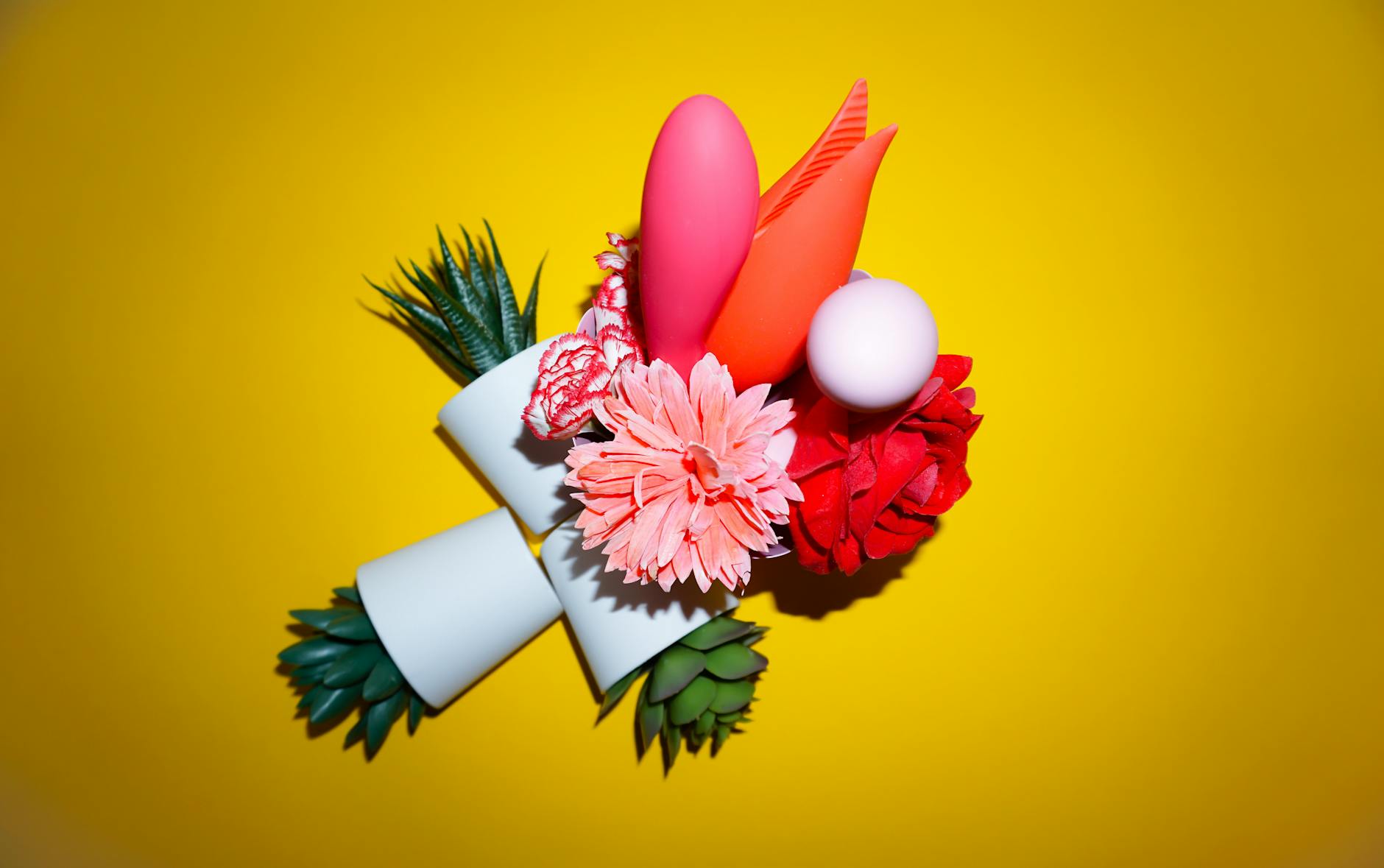
When pleasure turns into pressure
Let's be real: anxiety doesn't just live in your head. It colonizes your body. Your nervous system learns to brace itself right at the moment you should be relaxing. Your pelvic floor grips. Your breath gets shallow. Your mind spins with self-doubt instead of sensation. And then the whole thing feels less like intimacy and more like a performance review where you're both the critic and the one being judged.
I've worked with hundreds of people who hit this wall. They describe it the same way: "I know I should want this. I just can't seem to feel it." That gap between knowing and feeling is where anxiety lives.
How anxiety hijacks arousal
Your autonomic nervous system has two main gears: sympathetic (the accelerator, fight-or-flight) and parasympathetic (the brake, rest-and-digest). Arousal requires the parasympathetic system to be fully in charge. But chronic anxiety keeps the sympathetic system half-engaged, even during sex. Your body is ready to run from danger instead of surrender to pleasure.
This isn't a personal failure. It's a neurological reality. Anxiety-driven arousal gets stuck in a loop: you anticipate failure, tension rises, arousal dies, you feel like you've failed, anxiety deepens. Each cycle makes the next one harder to break.
What makes clitoral stimulation with a tool like the Lem different is that it bypasses some of that anticipatory anxiety. You're not waiting for arousal to build through traditional touch. You're giving your nervous system direct, consistent, predictable input. That predictability is calming.
Why suction feels safer than friction
Most vibrators rely on oscillation or vibration, which requires your brain to interpret sensation in real-time. Your nervous system has to keep processing, adjusting, evaluating. It's cognitively loud.
Suction-based stimulation like the Lem works differently. It creates a gentle, rhythmic pressure that doesn't require interpretation. You're not asking your brain to judge whether this is working or whether you're doing it right. The sensation is simple, direct, repetitive. For an anxious nervous system, that simplicity is profound.
The rhythm also matters. When something happens at predictable intervals, your nervous system relaxes into it. Unpredictability keeps you braced. That's why a consistent pattern on the Lem helps anxiety-driven bodies more than, say, a partner's touch, which naturally varies in pressure and timing.
How to use a clitoral vibrator when anxiety is blocking pleasure
Three principles that change the game:
1. Start low-stakes. Use your lemon vibrator or other clitoral vibrator solo, not as a performance tool with a partner. There's no pressure to orgasm, no timeline, no one watching. You're gathering data, not hitting a target. Your only job is to notice sensation. That's it.
2. Use it during calm moments, not just when you're trying to get aroused. Hold the Lem against your outer labia while you're reading, listening to music, or talking with your partner. Let your nervous system learn that this tool exists and it's benign. You're desensitizing the anticipatory panic before it even starts.
3. Prioritize consistency over intensity. Leave it on a low or medium pattern and let it do the work. Don't chase harder settings thinking you need to "maximize" the experience. Your anxious brain often wants to prove something to itself. Resist that. Boring, steady stimulation retrains your nervous system more effectively than exciting, variable stimulation.
The role of breathing and pelvic floor release
Anxiety tightens the pelvic floor. You probably know this intuitively. When you're stressed, that whole area locks up. Pleasure requires the opposite: a relaxed, open pelvic floor.
When you're using a lemon vibrator, pair it with intentional breathing. Breathe in for four counts, out for six. The longer exhale signals safety to your parasympathetic nervous system. As you breathe, notice where your pelvic floor is. Is it gripping? If so, imagine it softening, releasing, opening. This isn't visualization woo. It's direct nervous system training.
Over time, the pairing of the Lem's consistent rhythm plus your longer breathing pattern teaches your body that this specific context is safe. Your nervous system stops bracing. Pleasure becomes possible again.
When anxiety is rooted in past experience
Sometimes pleasure anxiety isn't just generalized stress. It's connected to past harm, pressure, or disconnect. Maybe you were pushed into sex before you were ready. Maybe your pleasure was conditional on your partner's satisfaction. Maybe you internalized the message that your desires were shameful.
If that resonates, using a clitoral vibrator is partly about neurological retraining, but it's also about reclaiming agency. You're choosing when, how, and for how long. You're setting the pace. You're in control. The Lem isn't something that's done to you. It's something you do for yourself.
That distinction matters clinically. It's the difference between passive reception and active choice. And choice is how anxiety begins to release its grip.
The conversation with a partner
If you're in a relationship, solo use of a lemon vibrator doesn't have to stay secret, but it also doesn't have to become a couple activity right away. You're rebuilding your own nervous system's trust with pleasure. That's personal work.
When you do eventually involve a partner, the conversation is important. "I'm working on rebuilding my arousal after some anxiety. Having my own tool helps me feel in control. It's not about you or us. It's about me getting back to myself." A partner who loves you will understand that.
Sometimes, once you've rebuilt that nervous-system trust solo, bringing a partner's touch back into the picture becomes easier. Other times, you find you actually prefer the consistency and predictability of the tool. Both are valid.
Rebuilding pleasure as a practice, not an outcome
Here's what I tell people: you're not trying to have an orgasm. You're training your nervous system to recognize that pleasure is available and safe.
Start with five to ten minutes, a few times a week. No goal beyond noticing sensation. Gradually, over weeks, you'll notice your body's defenses softening. The anticipatory grip will loosen. Your breathing will deepen on its own. And then, almost incidentally, arousal might show up again. Not because you forced it. Because you stopped bracing against it.
Read more about how lemon vibrators help when pleasure feels rushed or pressured to explore other pressure-related barriers to pleasure.
If anxiety is rooted in relationship dynamics, understanding how lemon vibrators help when you can't orgasm with a partner present might offer additional insight.
FAQ
Can using a vibrator actually reduce sexual anxiety, or does it just mask it?
It retrains it. Using a clitoral vibrator like the Lem creates repeated, safe experiences of pleasure. Your nervous system learns through repetition that this context is not dangerous. Over time, that safety signal generalizes. The anxiety doesn't disappear overnight, but your body stops perceiving pleasure as a threat. That's not masking. That's rewiring.
What if I still feel anxious even while using a clitoral vibrator?
That's normal, especially at first. Your nervous system might need weeks of consistent, pressure-free experiences before it fully relaxes. The key is to notice the anxiety without fighting it. "There's anxiety. That's okay. I'm still here. The vibrator is still here. This is still safe." Over time, the consistency of the experience teaches your body that the anxiety was a false alarm.
Is using a toy alone better than trying with a partner when I'm anxious?
Yes, initially. When you're anxious, the presence of a partner introduces an additional variable: their expectations, their touch, their potential disappointment. Solo time with a lemon vibrator removes that. You're not performing. You're not being observed. That clarity is clinically valuable for retraining an anxious nervous system. Once you've rebuilt your own trust, partnered pleasure becomes easier.
How long does it take before anxiety stops blocking pleasure?
Every nervous system is different. Some people notice a shift in 3-4 weeks of consistent use. Others need 8-12 weeks. It depends on how long the anxiety has been present, whether it's tied to trauma, and how much stress you're managing in the rest of your life. The key is consistency over speed. Using your clitoral vibrator three times a week for twelve weeks is more effective than every day for two weeks.
If I have an orgasm with the vibrator but not with my partner, does that mean something's wrong with the relationship?
No. It means your nervous system feels safer in one context than the other. That's information, not a diagnosis. It tells you something about your own needs for control, predictability, or privacy. It doesn't tell you the relationship is broken. But it might tell you that a conversation about how to recreate some of that safety with your partner is worth having.
Can pleasure anxiety get worse if I use a vibrator too much?
No, but you can create a dependency on the specific tool or context. The goal is to eventually generalize what you've learned back to partnered or other solo experiences. So somewhere around week 8-10, start experimenting with using the vibrator alongside other sensations. Maybe use it while your partner is holding you. Or use it for five minutes, then stop and notice what your body feels like without it. Gradually, you're teaching your nervous system that pleasure lives in you, not in the tool.
Rebuilding trust with your body
Anxiety and pleasure have been fighting for real estate in your body for a while now. That's a real conflict. It doesn't resolve through willpower or distraction.
It resolves through safety. Consistent, predictable, boring safety. The Lem and other clitoral vibrators provide exactly that. They're tools for nervous system retraining, not shortcuts to orgasm. When you use them that way, when you focus on the practice instead of the outcome, pleasure comes back. Not all at once. Gradually. And that's how you know it's real.
If you're ready to start, you don't need anything fancy. The Lemon clitoral vibrator is designed exactly for this kind of intentional, pressure-free exploration. Start low, go slow, and trust the process.
Want to talk through your specific situation? Reach out and we can explore what might work best for you.